
Resume vs CV: What’s the Difference and Which One Do I Need?
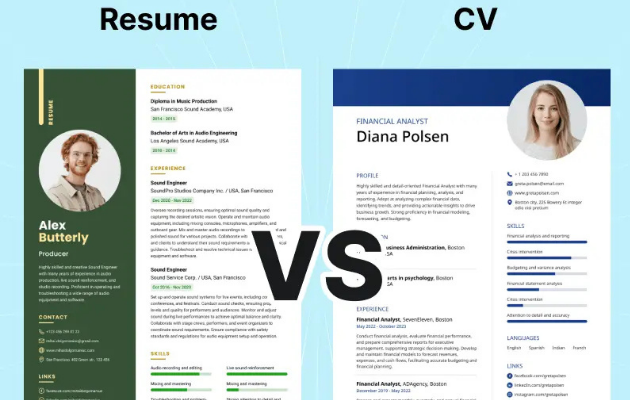
A resume is a concise, job-targeted summary of your experience and qualifications, while a CV (curriculum vitae) is a longer, comprehensive record of your academic and professional history. Use a resume for most industry roles and a CV for academic, research, medical/clinical, or certain international applications. If the employer specifies “resume” or “CV,” follow that instruction exactly.
Why It Matters
Submitting the wrong document can get your application screened out early or signal you don’t understand the role’s expectations. Using the right format also makes it easier for ATS systems and hiring teams to find and evaluate your most relevant qualifications, which directly affects interview volume.
Framework for Choosing
-
Follow the employer’s instruction first
Check the job posting and application portal. If it says “resume,” submit a resume; if it says “CV,” submit a CV. If it says “resume/CV accepted,” decide based on role type and regional norms (industry typically favors resumes; academic/research typically favors CVs). -
Choose by role type and what’s being evaluated
Resume: most corporate, startup, nonprofit, and government roles where reviewers want a fast, tailored fit assessment. CV: roles where publications, research, teaching, grants, presentations, or clinical training materially influence selection. -
Confirm region-specific naming conventions
In some regions, “CV” is used to mean what other regions call a “resume.” For international applications, align to the posting’s wording and local expectations for length, sections, and detail. -
Align with the screening process (ATS + human review)
Resume: keep structure ATS-friendly (clear headings, easy parsing) and align keywords and accomplishments to the job description. CV: keep it structured and readable, but prioritize completeness (for example, a full publications list) over brevity. -
Use the right structure and include only what strengthens your case
Resume: lead with a strong summary and role-relevant skills; highlight recent, relevant experience with clear accomplishments and impact. CV: organize by categories such as education, research, publications, teaching, grants, presentations, service; ensure accuracy and consistent formatting across sections.
If you’re applying but not getting callbacks, build an ATS-optimized, recruiter-ready resume with bechosen.app to turn more applications into interviews.
Real-World Example
One candidate with 6 years of experience applies to two roles:
- “Marketing Manager” role submitted through an online portal that requests a “resume.” They submit a resume: a targeted summary, skills aligned to the posting, and recent marketing experience written as accomplishments with measurable outcomes; unrelated details are removed.
- “Research Associate” role in a university lab that requests a “CV.” They submit a CV: education, research projects and methods/skills, publications/manuscripts (if any), conference presentations, teaching/mentoring, awards, and relevant service—because evaluators often weigh scholarly output and research depth.
If a posting says “CV or resume accepted,” they choose the format that matches what the role evaluates: resume for the industry marketing role; CV for the academic research role.
Common Mistakes to Avoid
- Submitting a CV for a standard industry role when the employer expects a resume.
- Ignoring the posting/portal wording and uploading the wrong format (resume vs. CV vs. both accepted).
- Reusing a generic resume instead of aligning skills, keywords, and accomplishments to the job description.
- Using formatting that’s hard for ATS to parse (heavy graphics, unclear or inconsistent headings).
- Treating a CV like a slightly longer resume and omitting expected academic categories (publications, presentations, grants).
Frequently Asked Questions
What should I include in my resume?
Your resume should include a strong summary, relevant skills, and recent work experience with measurable accomplishments.
How long should my CV be?
A CV can be multiple pages long, as it includes comprehensive details about your academic and professional history.
Can I use the same document for both applications?
No, it’s essential to tailor your document to fit the specific requirements of the job posting.
What if the job posting doesn’t specify?
Choose based on the role type and regional norms; typically, use a resume for industry roles and a CV for academic positions.
Final Thoughts
Use a resume when you need a concise, job-specific document optimized for quick review and ATS screening; use a CV when you need a comprehensive record—most often for academic, research, medical/clinical, or certain international contexts. The most reliable rule is to follow what the posting requests, then format for how you’ll be evaluated: relevance and impact for resumes, completeness and credibility for CVs.